Thursday, 31 December 2020

我的2020年投资成绩

 
2020年9月到12月之间,
组合中手套公司纷纷股价大跌,
一方面其他行业公司股价则上涨,
互相弥补,
所以跟3个月前的回酬比起来只是下降了些许。

我的2020年投资成绩为ROA = 24.2%, ROE = 41.7%。

接下来对比看看2020年头和现在的投资组合,
2020年一开始时,
我的投资组合如下:
1) HARTA (26%)
2) AEONCR (20%)
3) LPI (14%)
4) ALLIANZ (13%)
5) STMKB (11%)
6) AEON (8%)
7) NESTLE (6%)
8) PANAMY (2%)

现在:

1) AEONCR (20%)
2) HARTA (19%)
3) ALLIANZ (16%)
4) STMKB (14%)
5) ELKDESA (10%)
6) KAWAN (10%)
7) KOSSAN (5%)
8) TOPGLOV (5%)
9) LPI (1%)

目前为止的回酬,
主要是靠在3月到4月之间所买入的各家公司股票,
当然手套公司提供了最多的盈利。

我在3月的大跌时一度失去3分之1的身家,
现在可说是好不容易赚了回来。

假设说,
我今年年头有100K,
那么大跌后我就只剩下66K左右,
靠着各家公司的大涨,
我才达到接近140K的水平。

从66K回到140K,
也就是要靠66K赚回74K,
所以只算我在股市最低点到如今的回酬其实是112.1%。

在这里顺便写下历年的投资成绩:
2011 : ROE = +28.0%
2012 : ROE = +32.8%
2013 : ROE = +15.0%, ROA = +13.3% (开始使用SMF)
2014 : ROE =  -12.0%, ROA =  - 8.0%
2015 : ROE = +21.6%, ROA = +13.3%
2016 : ROE = +38.0%, ROA = +22.2%
2017 : ROE = +40.5%, ROA = +24.9%
2018 : ROE = +16.0%, ROA = +13.3%
2019 : ROE =  - 3.2% , ROA =  - 2.2%
2020 : ROE = +41.7% ,ROA = +24.2%

也就是说,
如果2011年初我有1百万,
那么这笔钱经过10年的投资后,
会变成6百45万,
但很可惜,
2011年初还是大学生的我,
起始资金连5位数都不到。

如果没有利用SMF,
那么10年后只会变成4百万多,
不得不说SMF真的帮助了我不少。

关于接下来的投资方向.................

目前来说还是一样,
疫情没有什么改变,
就算疫苗面世了,
病毒也不可能隔天就马上消失,
所以我的投资也没有什么重大的改变。

在此也宣布一下,
我会暂停把每篇文章翻译成英文,
先专心于中文部落格,
毕竟最近每次想到写了文后还要翻译成英文,
都会觉得有种负担,
令到写文的兴致也跟着消失。

最后在这里再次奉劝各位,
到处趴趴走或聚餐之前请三思而行,
就像3个月前我说过的:
“大家一起CUTI-CUTI MALAYSIA,
结果就是COVID-COVID MALAYSIA了。”

要不要到处趴趴走或聚餐就跟投资一样,
都是自己思考,自己做决定,
并对自己所做的决定负起责任。

My investment return for year 2020

  
From September 2020 to December 2020,
the shares price of glove companies dropped a lot,
while shares price of companies from other industries rose.

As a result,
my investment return for year 2020 : ROA = 24.2%, ROE = 41.7%.

Below is the comparison of my investment portfolio at the start of year 2020 till now:

Start of year 2020:
1) HARTA (26%)
2) AEONCR (20%)
3) LPI (14%)
4) ALLIANZ (13%)
5) STMKB (11%)
6) AEON (8%)
7) NESTLE (6%)
8) PANAMY (2%)

Now:
1) AEONCR (20%)
2) HARTA (19%)
3) ALLIANZ (16%)
4) STMKB (14%)
5) ELKDESA (10%)
6) KAWAN (10%)
7) KOSSAN (5%)
8) TOPGLOV (5%)
9) LPI (1%)

My positive return were mostly contributed by the appreciation of shares price which I bought during the bear market at March and April,
of course glove companies contributed the majority of the profit.

I lost around 1/3 of my net worth during the bear market at March,
so now I can say that I finally earn back what I lost.

For example,
if I have 100K at the start of year 2020,
then I only left with 66K after the bear market.

From 66K back to 140K,
I had to earn 74K by investing 66K only,
which means that my return from the lowest point of shares market until now is around 112.1%.

Anyway,
My investment return for the past few years:
2011 : ROE = +28.0%
2012 : ROE = +32.8%
2013 : ROE = +15.0%, ROA = +13.3% (started using SMF)
2014 : ROE =  -12.0%, ROA =  - 8.0%
2015 : ROE = +21.6%, ROA = +13.3%
2016 : ROE = +38.0%, ROA = +22.2%
2017 : ROE = +40.5%, ROA = +24.9%
2018 : ROE = +16.0%, ROA = +13.3%
2019 : ROE =    -2.2% , ROA =   -3.2%
2020 : ROE = +41.7% ,ROA = +24.2%

If I have 1 million at the start of year 2011,
after 10 years of investment,
it will appreciate to 6.45 million.

Sadly,
I was an university student at year 2011,
I didn't even have 10k as my initial capital....

If without using SMF,
after 10 years it will grow into slightly above 4 million,
so I have to admit that SMF really helped me a lot.

As for my investment strategy for the future......................

For now,
the pandemic seems like nothing is changing,
even the vaccines are out,
but the virus will not disappear right away,
so my investment is still no changes as well.

Just that.......
everyone please think twice before going out to travel.

Everyone CUTI-CUTI MALAYSIA,
thus now COVID-COVID MALAYSIA~

Traveling is same like investing,
all are about doing own thinking,
making own decision,
and you take full responsibility of your decision.

LAST THING....
I AM SORRY FOR ALL MY READERS WHO READ ENGLISH VERSION,
since I will stop translating my future articles into English.

For the past few months,
every time I feel like wanting to write something,
and thinking that after writing in Chinese version I still need to translate into English version,
I suddenly lost the interest of writing.

Making this blog as Chinese version + English version somehow became a burden for me,
so I decided to stop English version,
and fully focusing on Chinese version.

Again,
I am sorry for English version readers.

Everyone please take care and good bye.

Thanks for reading.


Wednesday, 30 September 2020

我的2020年第3季度投资成绩


2020年6月到9月之间,
股市起起落落,
我的回酬一时高,一时低,
就像坐过山车一样,
而且还是看不到终点的那种。

我的2020年第3季度投资成绩为ROA = 29.1%, ROE = 50.1%。


接下来对比看看2020年头和现在的投资组合,
2020年一开始时,
我的投资组合如下:
1) HARTA (26%)
2) AEONCR (20%)
3) LPI (14%)
4) ALLIANZ (13%)
5) STMKB (11%)
6) AEON (8%)
7) NESTLE (6%)
8) PANAMY (2%)

现在:

1) AEONCR (22%)
2) HARTA (20%)
3) STMKB (12%)
4) ALLIANZ (11%)
5) ELKDESA (9%)
6) KAWAN (8%)
7) LPI (7%)
8) TOPGLOV (6%)
9) KOSSAN (5%)

目前为止的回酬,
主要是靠在3月到4月之间所买入的各家公司股票,
当然手套公司提供了最多的盈利。

我在3月的大跌时一度失去3分之1的身家,
现在可说是好不容易赚了回来。

假设说,
我今年年头有100K,
那么大跌后我就只剩下66K左右,
靠着各家公司的大涨,
我才达到150K的水平。

从66K回到150K,
也就是要靠66K赚回84K,
所以只算我在股市最低点到如今的回酬其实是127.3%。

对比起6月尾结算时的投资组合,
我的AEONCR和HARTA持股量变多了,
然后KOSSAN变少了。

这是因为之前手套公司涨太多,
我有卖出一些股票,
KOSSAN股票更是卖掉一半,
然后加码AEONCR,
刚好之后股市大跌,
我有捞了一些HARTA,
才会形成现在的投资组合比重。

当然,
做这些买进卖出的繁杂动作,
充其量也只是多赚了几千块,
值得思考是不是真的值得..............

在这里顺便写下历年的投资成绩:
2011 : ROE = +28.0%
2012 : ROE = +32.8%
2013 : ROE = +15.0%, ROA = +13.3% (开始使用SMF)
2014 : ROE =  -12.0%, ROA =  - 8.0%
2015 : ROE = +21.6%, ROA = +13.3%
2016 : ROE = +38.0%, ROA = +22.2%
2017 : ROE = +40.5%, ROA = +24.9%
2018 : ROE = +16.0%, ROA = +13.3%
2019 : ROE =  - 3.2% , ROA =  - 2.2%

关于接下来的投资方向.................

目前来说还是一样,
疫情没有什么改变,
那我也没有什么重大的改变。

在这里只能奉劝各位,
出去旅游之前请三思而行,
大家一起CUTI-CUTI MALAYSIA,
结果就是COVID-COVID MALAYSIA了~

旅游就跟投资一样,

My investment return for 3rd quarter 2020


From June 2020 to September 2020,
the shares market was very drastic,
my investment return was sometimes high, sometimes low,
just like a never ending roller-coaster.

ANYWAY,
my investment return until 3rd quarter 2020 is ROA = 29.1%, ROE = 50.1%.

Below is the comparison of my investment portfolio at the start of year 2020 till now:

Start of year 2020:
1) HARTA (26%)
2) AEONCR (20%)
3) LPI (14%)
4) ALLIANZ (13%)
5) STMKB (11%)
6) AEON (8%)
7) NESTLE (6%)
8) PANAMY (2%)

Now:
1) AEONCR (22%)
2) HARTA (20%)
3) STMKB (12%)
4) ALLIANZ (11%)
5) ELKDESA (9%)
6) KAWAN (8%)
7) LPI (7%)
8) TOPGLOV (6%)
9) KOSSAN (5%)

My positive return were mostly contributed by the appreciation of shares price which I bought during the bear market at March and April,
of course glove companies contributed the majority of the profit.

I lost around 1/3 of my net worth during the bear market at March,
so now I can say that I finally earn back what I lost.

For example,
if I have 100K at the start of year 2020,
then I only left with 66K after the bear market.

From 66K back to 150K,
I had to earn 84K by investing 66K only,
which means that my return from the lowest point of shares market until now is around 127.3%.

Comparing my portfolio at the end of June and now,
my holding of AEONCR and HARTA shares increased,
while holding of KOSSAN shares decreased.

Well,
when shares price of glove companies rose too much last time,
I sold some of it,
especially I sold half of my KOSSAN shares and I used that money to buy more AEONCR shares.

Then share prices of glove companies dropped a lot,
so I also bought some HARTA shares.

After all these selling and buying,
I did earn a few extra thousand bucks,
but considering all the troublesome,
is it really worthy??

Anyway,
My investment return for the past few years:
2011 : ROE = +28.0%
2012 : ROE = +32.8%
2013 : ROE = +15.0%, ROA = +13.3% (started using SMF)
2014 : ROE =  -12.0%, ROA =  - 8.0%
2015 : ROE = +21.6%, ROA = +13.3%
2016 : ROE = +38.0%, ROA = +22.2%
2017 : ROE = +40.5%, ROA = +24.9%
2018 : ROE = +16.0%, ROA = +13.3%
2019 : ROE =    -2.2% , ROA =   -3.2%

As for my investment strategy for the future......................

For now,
the pandemic seems like nothing is changing,
so my investment is still no change as well.

Just that.......
everyone please think twice before going out to travel.

Everyone CUTI-CUTI MALAYSIA,
thus now COVID-COVID MALAYSIA~

Traveling is same like investing,
all are about doing own thinking,
making own decision,
and you take full responsibility of your decision.

Thanks for reading.


I don't provide any buying/selling suggestion above,

please make your own investment decision and be responsible with it.


List of articles year 2018


Sunday, 2 August 2020

SMF篇:用股票或定期存款有何分别?


闲着没事,
就来写写关于SMF(Share Margin Financing)户口好了。

强烈建议对SMF户口有兴趣的各位,
先看过以下两篇文章:
为何我使用SMF来投资
当年我迅速累积身家的3把武器

说到SMF户口,
很多人第一个的疑问就是.................
我应该用我的股票还是定期存款来抵押呢?

通常会产生这个疑问的原因,
就是SMF户口的宣传语都是这么写的:
Trading Limit : up to a maximum of 2.5 times against Fixed Deposit.
Trading Limit : up to a maximum of 1.5 times against Shares.

哇~~~~
抵押定期存款有2.5倍Trading Limit,
但是抵押股票才只有1.5倍Trading Limit,
看起来定期存款比较值得喔?

真的是这样吗?

当年我也是傻傻地这样认为,
但还好我的SMF Banker好心地解释了一番,
我才明白过来,
其实差别不大。

为什么呢?

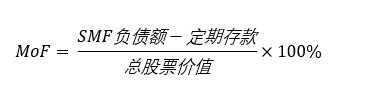
首先来看看MoF (Margin of Finance)的计算方法:
(关于MoF,以后我会写篇文章。)


然后根据我这里马来西亚,
大部分SMF户口的MoF都是60%,
所以我就用60%好了。

首先是状况一,
抵押总价值100K的股票。

注意!
不是总“市”值100K的股票噢!
而是总“价”值100K的股票!

这是因为银行有设置各股的% of MV和Cap Price,
(关于这些,以后也会写篇文章。)
所以就算有总市值100K的股票,
但对银行而言,
未必是总价值100K!

不过,
本文的重点在于抵押股票和定期存款的分别,
而不是关于MoF或Cap Price,
为了方便解释,
我们先假定MoF = 60%,
% of MV = 100,
然后银行没有设置Cap Price好了。

首先是状况一,
抵押总价值100K的股票,没有定期存款:

由于没有定期存款,
所以MoF的计算方法可以简化成:

还没有开始负债买股票时,
负债额是0,
总股票价值只有所抵押的100K,
所以MoF是0%:


所谓的1.5倍Trading Limit,
就是1.5 X 100K = 150K,
也就是说大概可以多负债150K来买股票,
如此一来MoF刚刚好是60%:


就结果而言,
在负债150K的情况下,
拥有大约250K价值的股票。


接下来是状况二,
抵押100K的定期存款,
这时就要用回最完整的算法:

抵押定期存款的话,
是2.5倍Trading Limit,
就是2.5 X 100K = 250K,
也就是说大概可以多负债250K来买股票,
如此一来MoF刚刚好是60%:


就结果而言,
在负债250K的情况下,
拥有大约250K价值的股票。


总归来说,
不管是状况一或状况二,
最终都是拥有250K价值的股票。

这就是我为什么一开始说,
结果是差不多的。

当然,
状况一:负债150K,股票250K
状况二:负债250K,股票250K,定期存款100K

如果不单纯看结果,
从会计账面上来看,
是有所不同的。

然后,
Force Selling的风险是一样的。

当股票大跌,
MoF超过70%时,
就会启动Force Selling。

不管状况一或者是状况二,
股票价值从250K跌到210K都会启动Force Selling:


“用定期存款抵押,风险没变,并不会更安全。”


基本上除了计算过程稍微不一样,
就结果和风险而言,
是一样的。

当然,
除非用OPM~

以上就是今次所要探讨的主题,
若有任何疑问,
欢迎留言。

对于SMF有什么想知道的,
或有任何不清楚的,
也可以留言给我,
这样我才会有灵感写文~

感谢阅读。

以上言论没有任何买卖建议,
大家买卖自负。


SMF Series : Any difference for using shares or FD as collateral?


Since SMF(Share Margin Financing) account is something that not many people write about it,
so I decided to start writing it.

For those who have interest at SMF account,
feel free to read the two chapters below first:

When talking about SMF account,
the first question which appeared at everyone's mind is:
"Should I use shares or fixed deposit as collateral?"

The reason why this question arose,
is because of what is written on the promotion of SMF account:
Trading Limit : up to a maximum of 2.5 times against Fixed Deposit.
Trading Limit : up to a maximum of 1.5 times against Shares.

Wow~~~
2.5 times Trading Limit for Fixed Deposit,
but only 1.5 times Trading Limit for shares,
seems like using FD as collateral is much more worth it??

Is it???

I was thinking like that too,
only after my SMF Banker kindly explained to me,
I understood that the difference is not that significant.

WHY?

First let's see the calculation formula  of MoF (Margin of Finance):
(I will write an article specially about MoF next time.)


Following the standard at Malaysia,
the MoF of majority of the SMF account is 60%,
so I will use 60% too.

Situation 1: 100K shares value as collateral

Beware!
It is 100K shares value!
Not 100K market shares value!

This is because the investment bank each set its won % of MV and Cap Price for different shares,
(I will write more about this at the future.)
so even though the shares is worthy of 100K market value,
but it might not be 100K shares value for the bank!

ANYWAY,
the main focus of this article is about the difference of using shares or FD as collateral,
and not about the MoF or Cap Price.

So to simplify everything,
we will assume that the MoF = 60%,
% of MV = 100,
and no Cap Price.

Again,
Situation 1: 100K shares value as collateral, no FD.

Since no FD,
so the calculation of MoF can be simplified like this:


When first started,
there is no outstanding loan,
and only 100K total shares value,
the MoF is 0%:


The 1.5 times Trading Limit,
is because of 1.5 X 100K = 150K,
which meant that maximum 150K loan can be used to buy more shares,
and the MoF will be exactly 60%:


At the end,
250K value of shares are acquired by having 150K loan.


Situation 2:
By using 100K FD as collateral,
this time we will use back the the complete formula:


By using FD as collateral,
2.5 times of Trading Limit will be given,
because 2.5 X 100K = 250K.

Thus,
250K loan can be used to buy more shares,
and the MoF will be exactly 60%:


At the end,
250K value of shares are acquired by having 250K loan.


As conclusion,
no matter it is situation 1 or 2,
at the very end still will have 250K value of shares.

That's why I mentioned above,
the difference is not very significant.

Of course,
Situation 1 : 150K loan, 250K shares
Situation 2 : 250K loan, 250K shares, 100K FD

If looking at it in terms of accounting,
it is sort of different.

However,
the risk of Force Selling is the same.

If the value of shares drop a lot until the MoF is over 70%,
then the Force Selling will be activated.

No matter Situation 1 or 2,
when the shares value dropped from 250K to 210K,
Force Selling will be activated:
 

"When using FD as collateral, the risk is still the same."

Basically,
only the calculation part a bit different,
the end result and the risk are the same.

Well,
unless it is OPM~

That's all I wanted to share about this topic,
feel free to comment below if there is any question.

Also,
feel free to ask anything about SMF,
then I will know what to share next~

Thanks for reading.